
What Is Pichwai Art? The Story Behind Hertha Nest’s Hand-Painted Jewellery Boxes
Some of the smallest things we own carry the biggest memories. Earrings worn at a family wedding, a favourite ring or a bracelet received as a gift deserve a place where they can be kept and enjoyed.
A hand-painted jewellery box brings a little beauty to that everyday ritual. Placed beside a mirror or on a bedroom shelf, it becomes part of the room’s character while keeping small belongings together.
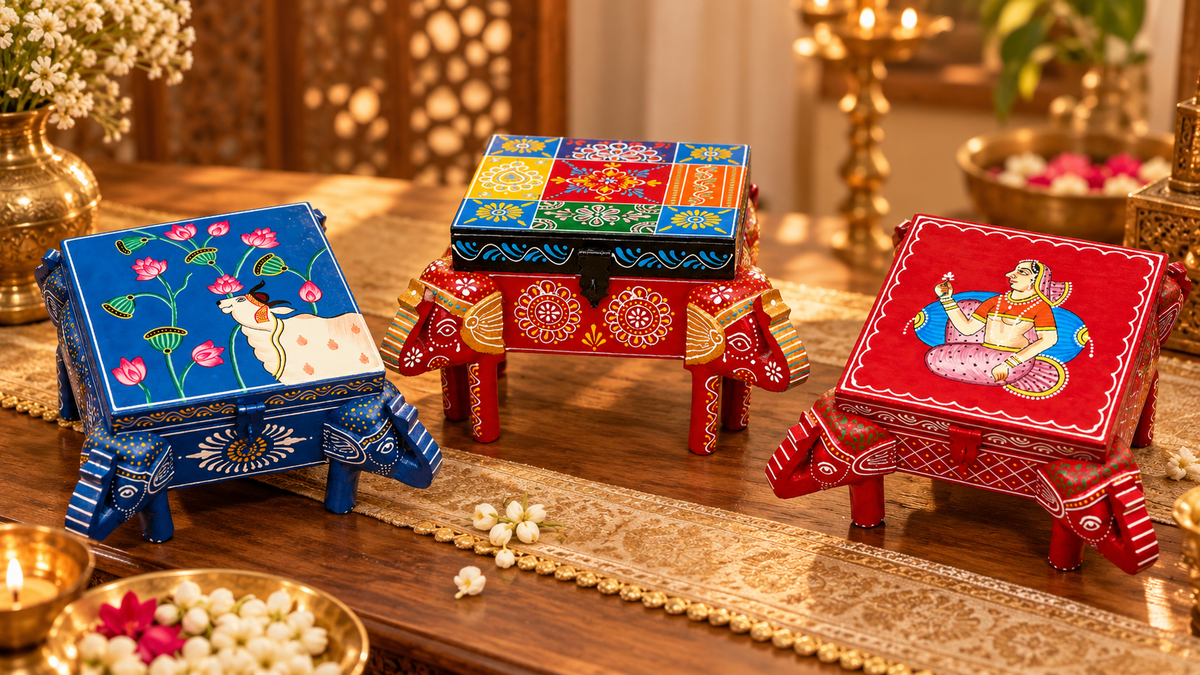
Hertha Nest’s three Pichwai-inspired and multicolour elephant-base jewellery boxes combine decorative artwork with useful storage. Their painted details invite a closer look—and a question: what is Pichwai art, and how does its influence find a place in contemporary homes?
What Is Pichwai Art?
Pichwai is a devotional textile tradition closely associated with Shrinathji, a form of Lord Krishna, and the temple town of Nathdwara in Rajasthan.
Traditionally, Pichwai textiles are displayed behind the deity. The word refers to something that hangs at the back, reflecting their role as decorative and devotional backdrops.
Their imagery tells stories connected with Krishna, worship, festivals and the changing seasons. Cows, flowers, peacocks and carefully arranged natural settings appear throughout the tradition. Historic Pichwais include painted, woven, embroidered and printed textiles.
Knowing this background gives the art greater meaning. Beyond its rich colours and intricate details lies a tradition shaped by devotion and storytelling.
From Traditional Pichwai to Contemporary Home Décor
Art can influence the objects we use every day. Colours, patterns and decorative arrangements associated with a traditional art form may inspire modern accessories, textiles and storage pieces.
A Pichwai-inspired jewellery box is a contemporary interpretation of that influence. It serves a different purpose from a traditional temple textile, bringing selected decorative ideas into a smaller household object.
For an additional visual reference, the article includes this YouTube video.
The distinction is useful when choosing Indian handicraft gifts. A floral pattern or elephant-shaped base alone does not establish an object’s traditional provenance or identify the artisan who made it.
Hertha Nest describes its jewellery boxes as Pichwai-inspired, helping shoppers understand the design influence behind the collection.
Discover Hertha Nest’s Three Elephant-Base Jewellery Boxes
Hertha Nest’s collection includes three separately listed jewellery boxes: the Hand-Painted Pichwai Jewellery / Storage Box, the Hand-Painted Multicolour Jewellery / Storage Box and the Hand Painted Jewellery Box Red 2. Each gives you a different design to consider. When choosing between them, compare the product photographs, painted details and overall colour balance with the space where you plan to place your box.
Hand-Painted Pichwai Jewellery / Storage Box
The Hand-Painted Pichwai Jewellery / Storage Box combines colourful painted motifs with an elephant-shaped supporting base.
Its raised structure gives the box a sculptural quality. On a dressing table, the base becomes part of the display, making the piece interesting to look at from more than one angle.
The listing describes floral and geometric detailing across the painted surface, alongside a compartment for small belongings. For someone who enjoys decorative storage, this design offers an appealing way to keep favourite accessories close at hand.
Hand-Painted Multicolour Jewellery / Storage Box
The Hand-Painted Multicolour Jewellery / Storage Box is another option within the elephant-base collection. A multicolour jewellery box offers plenty of styling possibilities. You might pick one colour from its painted design and repeat it in a nearby cushion, artwork or small decorative accent.
It can also provide a colourful focal point in a room with plain walls and simple furniture. Giving the box some clear space around it allows the artwork and silhouette to remain visible.
Hand Painted Jewellery Box Red 2
Listed as Hand Painted Jewellery Box Red 2, the third design provides another choice within the collection. Before selecting it for your home or as a gift, browse the complete product gallery. Look at how its colours work together, how the details appear from different angles and whether the design feels right for the intended space.
Choosing a hand-painted jewellery box is personal. The piece you enjoy looking at every day is often the one that becomes a lasting part of your home.
How to Choose the Right Hand-Painted Jewellery Box
A beautiful design may catch your attention first, but practical details help you decide whether a box will suit your routine.
Think About What You Want to Store
Begin with the belongings you reach for most often. Perhaps you need a place for everyday earrings, occasional accessories or small sentimental keepsakes.
Check the product dimensions and interior photographs before buying. If you need separate sections for rings or necklaces, confirm whether the box includes them.
For delicate pieces, individual soft pouches may help keep items apart, provided they fit comfortably inside.
Choose a Convenient Place
A jewellery box is most useful when it is easy to reach. Consider a dressing table, bedroom shelf or cabinet where you naturally get ready.
Allow enough room to open the lid comfortably. Keep the surface stable and avoid areas exposed to water splashes.
Look Closely at the Artwork
When shopping for a jewellery box online, take time to view the close-up photographs.
Notice the brushwork, motif placement and overall finish. Hertha Nest notes that hand-painted pieces may show small variations in colour and detailing, which form part of their individual character.
Styling a Decorative Jewellery Box at Home
You do not need to redesign a room to introduce a piece of Indian-inspired décor. A single decorative storage box can give an existing corner a fresh focus.
On a Dressing Table
Place the box beside a simple mirror, leaving space around the elephant-shaped base. Keep taller objects to one side so they do not hide the design.
This arrangement makes the box easy to use while allowing the painted details to remain part of the room.
On a Bookshelf
Style it beside a small stack of books or a plain photo frame. A quieter background helps a colourful jewellery box stand out.
Avoid crowding the shelf with several equally detailed objects. Give each piece enough space to be appreciated.
In a Festive Display
For a seasonal arrangement, pair the box with a textile runner and an LED candle. Choose a few complementary colours to create a connected look.
The same box can return to its everyday place after the celebration, giving it a useful role throughout the year.
Why a Jewellery Box Makes a Thoughtful Gift
The best gifts often reflect something you have noticed about a person.
A friend who enjoys earrings may appreciate somewhere to keep favourite pairs. Someone setting up a new home may enjoy a decorative object that also serves a practical purpose.
A hand-painted jewellery box can be considered for birthdays, housewarmings, weddings and festive gifting. The choice becomes more personal when you select the artwork with the recipient’s taste in mind.
You could include a handwritten note explaining why the design reminded you of them. If you plan to place another gift inside, check the box’s dimensions first.
How to Care for a Hand-Painted Jewellery Box
Gentle care helps preserve painted detailing.
Hertha Nest’s care guidance for its Pichwai jewellery box recommends cleaning with a soft, dry cloth, avoiding water and abrasive cleaners, and handling the lid and fastening carefully. The listing also advises against overfilling the compartment.
Always follow the instructions supplied for the specific piece you purchase. When moving it, empty loose contents if necessary and lift the box carefully. For product-specific questions, you can contact Hertha Nest on WhatsApp.
Bring Art Into Your Everyday Routine
Understanding what Pichwai art is adds context to the decorative influences we encounter in contemporary homes. Its connection with devotion, textiles and storytelling deserves recognition.
A Pichwai-inspired jewellery box brings that appreciation into an everyday setting. It gives small belongings a place while adding colour and detail to a familiar corner.
Explore Hertha Nest’s collection to compare the three elephant-base jewellery boxes, check their specifications and choose a design that feels right for your home or a thoughtful gift.
Frequently Asked Questions
What is Pichwai art traditionally used for?
Pichwai textiles traditionally serve as backdrops for Shrinathji worship. Their imagery expresses devotional stories, seasonal settings and festive occasions.
Is a Pichwai-inspired jewellery box a traditional Pichwai painting?
A Pichwai-inspired jewellery box is a contemporary decorative adaptation. The description identifies a design influence; it does not, by itself, establish traditional provenance or artisan lineage.
What should I check before buying a jewellery box online?
Review the dimensions, interior photographs, material information, closure and care instructions. Make sure the storage space suits the jewellery or keepsakes you intend to place inside.
Can an elephant-base jewellery box be used as home décor?
Yes. You can style it on a dressing table, shelf or cabinet. Choose a stable surface and leave sufficient room to open the lid.
Is a hand-painted jewellery box suitable for gifting?
It can be a thoughtful choice for someone who enjoys jewellery, decorative storage or Indian-inspired home accessories. Select the design around the recipient’s preferences.
Which Hertha Nest jewellery boxes are covered in this article?
This article covers the Hand-Painted Pichwai Jewellery / Storage Box, Hand-Painted Multicolour Jewellery / Storage Box and Hand Painted Jewellery Box Red 2. You can also follow Hertha Nest on Instagram.