
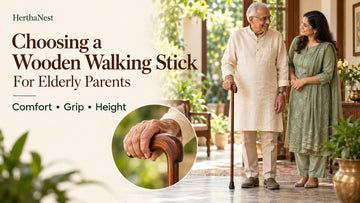


Choosing a Wooden Walking Stick for Elderly Parents: Comfort, Grip and Height
The right wooden walking stick should fit your parent’s height, feel comfortable in their hand, and have a secure rubber tip. Start with their support needs, then compare grip, weight, construction, and appearance. A physiotherapist can confirm whether a single stick is appropriate and check the fit before regular use.
Buying something for an ageing parent can feel surprisingly personal. You want them to feel comfortable on an evening walk, confident visiting a neighbour, and included in family outings. They may simply want something that looks familiar and does not make every conversation revolve around their age.
If you are choosing a wooden walking stick in Mumbai, think beyond the product photograph. Consider your parent’s usual footwear, the floors at home, the routes they take, and how the handle feels after several minutes. These everyday details make the buying decision more useful.
Start With Your Parent’s Routine and Preferences
Before discussing materials, ask where your parent expects to use the stick. Is it mainly for moving around the home, short outdoor walks, or travelling to appointments? Will they carry it in a car? Do they already use a walking aid recommended by a clinician?
A wooden walking stick should be chosen with the person who will use it. Someone may love a traditional finish but dislike a carved handle. Another person may prefer a plain design because it feels easier to hold. Neither preference is trivial when the item becomes part of daily life.
Try asking, “What would make your usual walk more comfortable?” This invites a practical conversation without suggesting that growing older means giving up independence. If possible, shortlist options together and let your parent describe what feels right.
Avoid buying a surprise mobility aid based only on a birthday or festival. A wooden walking stick still needs an appropriate fit, and the recipient should have a say in the choice.
Is a Wooden Stick the Right Type of Walking Aid?
A wooden walking stick is one possible aid, rather than a universal solution for older adults. The NHS explains that walking sticks can provide extra support and balance, while walking frames offer more support. The right category depends on the person’s actual needs.
If your parent has substantial weakness, significant balance difficulties, repeated falls, or needs to lean heavily on support, arrange an assessment before buying. MedlinePlus notes that a walker or crutches may be more appropriate when pain, weakness, or balance problems are considerable.
This distinction matters when browsing attractive handcrafted products. A decorative stick and a walking aid suitable for daily support may look similar in photographs. Ask the seller about intended use, construction, and any stated user weight limit; a wooden finish alone confirms none of these.
For someone already receiving rehabilitation or following surgery, use the aid recommended by their healthcare professional. Match the purchase to that advice instead of choosing a different format for appearance alone.
How Do You Choose the Correct Height?
For a wooden walking stick, handle height is a crucial starting point. General fitting guidance places the top of the handle around the wrist crease when the person stands upright with their arm relaxed at their side. Their elbow should remain slightly bent while holding it.
The Arthritis Foundation recommends wearing walking shoes during fitting. This makes the measurement relevant to everyday use. A barefoot measurement may not represent the height needed when your parent goes outside in their usual footwear.
Use this simple preparation checklist:
- Bring the footwear your parent normally wears for walking.
- Ask them to stand in their usual upright posture, with support if needed.
- Note the distance from the floor to the wrist crease.
- Compare that measurement with the product’s overall height, including its tip.
- Have a physiotherapist confirm the fit and observe its use.
Do not buy a wooden walking stick using your parent’s overall height alone. Two people of similar height may need different handle heights. Treat online sizing charts as a starting reference rather than an individual fitting assessment.
If the product has a fixed length, ask whether professional sizing is available and whether alteration affects returns. Do not cut or modify it yourself without confirming the manufacturer’s instructions and arranging an appropriate fit.
What Makes a Handle Comfortable?
A comfortable wooden walking stick should suit the user’s hand rather than merely look impressive on display. Mayo Clinic advises choosing a comfortable grip and notes that a larger grip may help people who have difficulty grasping with their fingers.
During a trial, invite your parent to describe the feeling in their palm. Does the handle sit naturally? Are there uncomfortable edges? Do they feel they must squeeze hard? Their answers are more useful than a seller describing every handle as ergonomic.
Look Beyond Decorative Carving
A horse-shaped or ornamental handle can be appealing, especially for someone who enjoys traditional craftsmanship. However, attractive carving does not establish suitability for prolonged support. Compare how the actual contact surfaces feel against the hand.
Take Hand Discomfort Seriously
If a wooden walking stick causes hand pain, finger numbness, or persistent discomfort, stop and ask a healthcare professional to check the grip and fit. Mayo Clinic identifies pain or numbness as possible signs that the handle is unsuitable.
Avoid assuming extra padding will solve every problem. Ask a physiotherapist which handle shape and material best suit your parent, especially when arthritis or reduced hand strength affects their grip.
How Important Are Weight and Construction?
A wooden walking stick needs to be manageable as well as appropriately constructed for its intended use. Ask for the actual product weight. Words such as lightweight, sturdy, and premium are difficult to compare without measurements or supporting specifications.
Remember that an older adult may carry the stick while entering a vehicle, sitting down, or moving through a doorway. Consider these moments when trying a wooden walking stick. Your parent should have time to explain whether the item feels cumbersome.
Ask the seller these questions:
- What material is used for the shaft and handle?
- Is the handle a separate component, and how is it secured?
- What is the product’s intended use?
- Is a maximum user weight stated by the manufacturer?
- Are replacement tips available in the correct size?
- What should customers do if a defect appears?
Inspect a wooden walking stick for visible cracks, splinters, loose parts, and an uneven finish. If construction details are unclear, request close photographs or a demonstration. Do not infer load capacity from the type of wood, thickness, or polished appearance.
Natural grain variations can make a handcrafted piece distinctive. They should not distract from the basic requirement that the product be suitable for the support your parent needs.
Why Does the Rubber Tip Matter?
The rubber tip, sometimes called a ferrule, is the part that contacts the floor. South Tees Hospitals advises replacing worn or split ferrules, checking for loose handles, and avoiding damaged walking aids. These checks deserve attention before use, not only after something feels wrong.
For a wooden walking stick, ask whether the tip is firmly fitted and whether the seller can supply compatible replacements. A generic replacement may not fit every shaft, so keep the relevant product details after purchase.
Do not interpret “anti-slip” as a guarantee on rainwater, soap, polished stone, or every outdoor surface. Mumbai buyers should consider wet entrances and changing floor conditions when discussing safe use with a physiotherapist.
Before an outing, look for visible wear, damage, or a loose tip. If a component needs replacing, arrange that before the stick is used again. A small maintenance issue should never become something the family simply works around.
A Practical Buying Checklist
Use this table when comparing a wooden walking stick online or discussing options with a local seller.
| Feature | What to Check | Question to Ask |
|---|---|---|
| Support needs | Whether this aid is appropriate | Has a physiotherapist recommended this type? |
| Height | Overall measurement and individual fit | Is the handle at the required height? |
| Grip | Comfortable shape and contact surfaces | Can my parent try the handle? |
| Weight | Actual product weight | Is it manageable during everyday handling? |
| Construction | Condition, intended use, and specifications | Is a manufacturer weight limit stated? |
| Rubber tip | Fit, condition, and replacement options | Which replacement ferrule fits? |
| After-sales support | Returns and defect reporting | What happens if the fit is unsuitable? |
Save the answers alongside the wooden walking stick product link. Comparing written details is easier than remembering several similar photographs, particularly when other family members are helping with the purchase.
Buying Locally in Mumbai and Borivali
When searching for a wooden walking stick in Borivali, use local contact information to ask practical questions before travelling. Confirm stock, measurements, visiting arrangements, and whether your parent can inspect the product. An online listing does not necessarily mean a fitting service is available.
HerthaNest lists its contact address as Shop No. 10, Ground Floor, DGS Sheetal Regalia, near Nancy Bus Depot, Borivali East, Mumbai, Maharashtra 400066. Its listed telephone number is 7506705286. Call ahead or contact the store rather than assuming a particular item is available to view.
If you are comparing a wooden walking stick in Mumbai online, also check delivery serviceability for your PIN code, dispatch estimates, return conditions, and packaging. A nearby seller does not automatically offer same-day delivery or free adjustments.
Families searching for a walking stick shop near Borivali East may find it helpful to bring a written shortlist. Include the required height, handle preference, and questions from the physiotherapist. This keeps the visit focused and reduces pressure to buy immediately.
Buyers elsewhere in Maharashtra can use the same approach over the phone. Request clear specifications and avoid placing an order until important questions about intended use and fit have been answered.
What Should You Check on HerthaNest’s Website?
HerthaNest’s walking-stick collection lists a plain model and a horse-shaped design. Both were marked out of stock when checked on 28 October 2026. Contact the store for updated availability rather than assuming either can currently be ordered.
Before selecting a wooden walking stick from any collection, confirm the full height, weight, handle details, tip material, and intended use. Do not assume that every necessary mobility specification appears in a short collection description.
You can browse HerthaNest’s walking-stick collection and contact the store with your questions. Product information should complement professional fitting advice rather than replace it.
Make a Small Purchase Plan
Before paying, agree on who will contact the seller, who will accompany your parent, and where the product information will be kept. Share the same measurements with everyone involved so different family members do not order conflicting options. Keep the receipt and original packaging until the fit and condition have been checked under the seller’s return terms.
It also helps to set a realistic budget for the complete purchase, including delivery and any approved replacement parts. Paying more for decorative details does not establish better suitability. Compare what is documented, ask about anything missing, and leave room for your parent to change their mind after discussing the options. Give your parent enough time to compare options without feeling rushed into making a purchase.
How Can You Help Your Parent Feel Comfortable With the Choice?
Choosing a wooden walking stick involves conversation as well as shopping. A parent who has always walked independently may have mixed feelings about using support. Give them space to express that without turning the discussion into an argument about age.
When introducing a wooden walking stick, focus on the activities your parent wants to continue. That might mean visiting friends, attending a family function, or enjoying a familiar evening routine. Let the goal come from them.
Avoid comparing them with another relative who uses a particular model. Similar ages do not mean similar needs. A borrowed aid may also have the wrong fit; the American Physical Therapy Association recommends individual assessment, fitting, and instruction.
After purchase, ask practical questions instead of seeking praise for the gift. “How does the handle feel?” and “Would you like the fit checked again?” make it easier for your parent to mention concerns honestly.
Caring for the Stick and Planning Everyday Use
Keep a wooden walking stick clean and dry according to its manufacturer’s instructions. Ask which cleaning products are suitable for the finish, and avoid adding oils, coatings, or accessories without checking compatibility.
Choose a sensible storage place where the stick will not become a tripping hazard. Discuss how your parent will manage it when sitting down or travelling. These small arrangements are worth considering before the first busy outing.
MedlinePlus recommends keeping walking areas clear, securing loose rugs and cords, maintaining dry floors, and wearing suitable non-slip footwear. A walking aid should be considered alongside the home environment, rather than treated as the only change needed.
Ask the physiotherapist to demonstrate walking, turning, and any necessary steps. For one weak or painful leg, general guidance places the stick in the opposite hand, but individual needs can change the approach. Follow the instructions given for your parent.
Choose for Everyday Comfort and Independence
The best wooden walking stick for your parent is one that meets their assessed support needs, fits properly, and feels acceptable to use. Start with their routine, involve them in the choice, and check comfort before placing appearance first.
For Mumbai and Borivali families, a local enquiry can clarify product details and availability. Take time to ask questions, confirm specifications, and arrange appropriate fitting advice. A considered purchase should support the life your parent wants to keep enjoying.
Frequently Asked Questions
What Height Should a Wooden Walking Stick Be?
The handle generally aligns with the wrist crease when the person stands upright with their arm relaxed. Their elbow should remain slightly bent while holding it. Measure in usual walking shoes and have a physiotherapist confirm the fit, especially for a fixed-length model.
Is Wood Better Than Metal for Elderly Parents?
Neither material is automatically better for everyone. Compare the actual aid’s fit, grip, weight, construction, adjustability, and intended use. Your parent’s support needs and professional advice matter more than choosing a material because it looks traditional or modern.
Can We Buy a Stick Without Our Parent Trying It?
Online shopping is possible, but obtain accurate specifications and understand the return policy first. Involve your parent in the decision and arrange a fitting check. Photographs cannot tell you whether the handle feels comfortable in their hand.
Where Can I Find a Wooden Walking Stick in Mumbai?
Compare local mobility suppliers and retailers, including HerthaNest’s listed collection and Borivali East contact details. Confirm stock before visiting or ordering. Ask specifically about intended use, dimensions, replacement tips, and whether any fitting assistance is actually offered.
Can a Walking Stick Prevent Every Fall?
No. Appropriate selection, fitting, training, maintenance, and attention to surroundings all matter. If your parent remains unsteady or has falls, seek a clinical assessment rather than assuming a different handle or heavier stick will solve the problem.