

Wooden Toys for Kids: Why Simple, Hands-On Play Still Matters
Children do not always need complicated toys to stay engaged. Sometimes, a simple object that they can touch, move, stack, push and explore can lead to hours of imaginative play.
That is one reason wooden toys for kids continue to have a place in modern playrooms.
Unlike many electronic toys that guide children toward a particular activity, simple wooden toys can leave more room for children to decide how they want to play.
From stackers and vehicles to rattles and activity-based toys, wooden play products can offer different experiences for different ages and interests.
Simple Toys Leave Room for Imagination
A wooden vehicle can become a bus, a delivery truck or part of an imaginary city.
Blocks and stackers can become towers, buildings or anything a child creates.
The toy does not always need to tell the child what to do. Open-ended play allows children to create their own stories and activities.
Hands-On Play Encourages Active Participation
Children learn by interacting with the world around them.
Picking up a toy, moving it across a surface, stacking pieces or fitting objects together involves physical interaction.
These simple actions can make play more active than simply watching a toy perform an action.
Wooden toys can be especially appealing because their shapes, textures and weight give children something tangible to explore.
Wooden Stackers Can Make Play More Interesting
Stacking toys are simple, but they can offer several ways to play.
A child can arrange pieces by size, colour or shape, build a tower and then start again.
This type of activity can encourage experimentation while keeping the play experience straightforward.
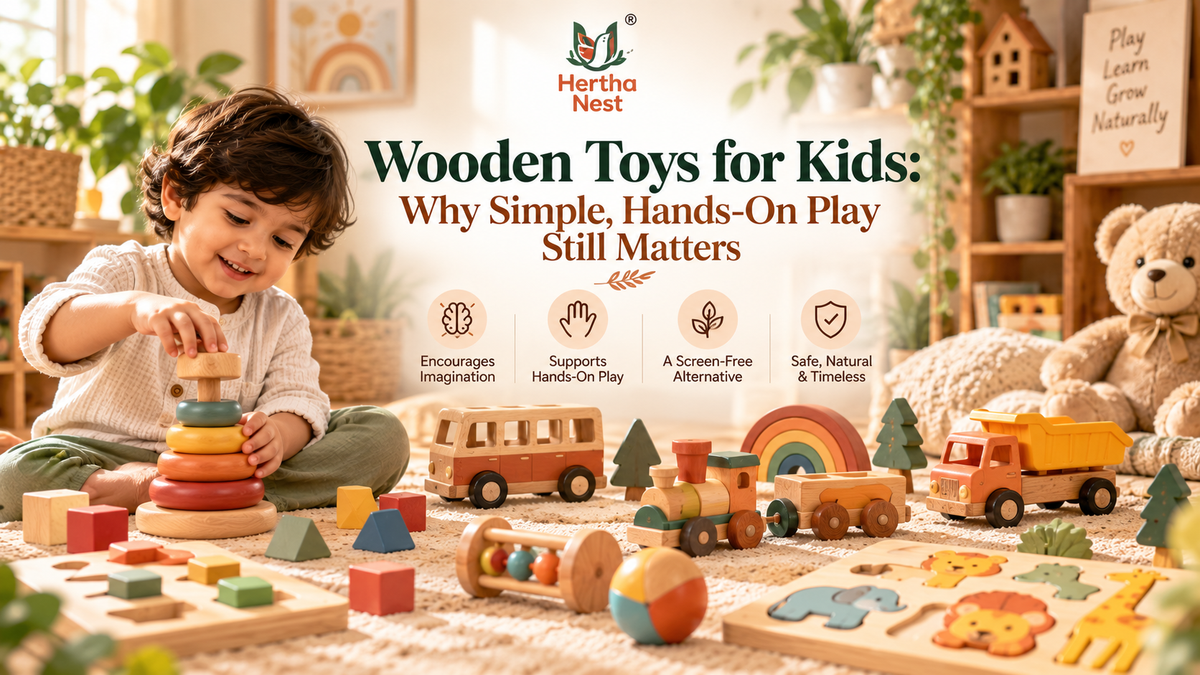
The Wooden Kids Toys collection includes different colourful stacker designs, including round, square, triangle, oval and pentagonal options.
Wooden Vehicles Encourage Pretend Play
Vehicles are naturally connected with storytelling.
A wooden bus can become part of a pretend school journey. A dumper truck can become part of a construction site. A train can travel through an imaginary town created by the child.
The collection currently includes products such as a wooden bus , a wooden dumper truck and Wooden Colourful Three Coach Train .
These give children different starting points for vehicle-based imaginative play.
Wooden Toys Can Support Quiet Play
Not every play session needs to be loud or filled with flashing lights.
Puzzles, stackers and simple wooden toys can offer a quieter alternative for children who enjoy focused activities.
Parents can create a small play area with a few carefully selected toys and rotate them occasionally instead of keeping every toy available at the same time.
Rattles Offer Sensory Exploration
For younger children, simple rattles can introduce sound and movement during play.
The current collection includes wooden rattles such as a Damaru Rattle, Dumbell Rattle and Joker Rattle with Whistle.
For younger children: always check the recommended age, construction and safety guidance provided with the product before choosing a rattle or any other toy.
Wooden Toys Can Make Screen-Free Time Easier
Screens are now part of many children's daily routines.
That does not mean they need to disappear completely, but creating opportunities for screen-free play can help add variety to the day.
A box containing vehicles, stackers, puzzles and other hands-on toys gives children options that do not depend on a screen.
The goal is not to make every activity educational. Children also need time to play simply because playing is enjoyable.
Choose Toys According to the Child's Interests
The best wooden toy is often the one that matches what a child already enjoys.
If they like vehicles, a wooden bus or train may be more interesting.
If they enjoy arranging objects, a stacker could be a better fit.
For younger children interested in sounds and movement, an age-appropriate rattle may be more suitable.
Thinking about the child's interests can make the choice more useful than simply selecting a toy because it looks attractive.
Simple Toys Can Become Part of Everyday Play
A toy does not need to be used only once or for one specific activity.
A wooden vehicle can be used in pretend play, a stacker can become part of a building game and a simple object can become something completely different in a child's imagination.
This flexibility is one of the reasons simple toys can remain interesting over time.
Quality and Safety Matter More Than Material Alone
Choosing wooden toys does not mean parents should ignore product quality.
Before purchasing, consider:
Check whether the toy matches the child's age group.
Pay attention to the dimensions of removable or separate pieces.
Check that the toy feels secure and appropriately constructed.
Inspect the surfaces and edges of the toy before use.
Consider the materials and finishes used on the specific product.
Be especially careful when selecting toys for younger children.
Use the product according to the manufacturer's guidance.
Wooden does not automatically mean safe for every age. The specific design and how the toy is used are equally important.
A Smaller Toy Collection Can Be Enough
Children do not necessarily need a room full of toys.
A smaller selection of versatile toys can provide plenty of opportunities for play.
Parents can also rotate toys, keeping some away for a while and bringing them back later.
This can make familiar toys feel interesting again while keeping the play area easier to organise.
Wooden Toys Can Also Make Thoughtful Gifts
Wooden toys can work well as birthday gifts, festival presents or gifts for young children.
Instead of choosing a toy based only on appearance, think about what kind of activity it offers.
A colourful stacker may suit a child who enjoys arranging things, while a wooden vehicle could appeal to someone who loves pretend journeys and construction play.
A Look at Wooden Toys Available at Hertha Nest
For parents exploring different types of wooden play products, Hertha Nest has a dedicated collection featuring wooden vehicles, stackers, rattles and other children's toys.
The collection includes 15 products, with examples such as wooden vehicles, colourful stackers and baby rattles .
This makes it easier to compare different styles of play rather than choosing a toy based only on its appearance.
How to Choose the Right Wooden Toy
Before buying, ask a few simple questions:
Choose a toy that connects with their existing interests.
Always check the manufacturer's recommended age and safety information.
Look for toys that give children something to do rather than simply something to watch.
Toys that support imaginative or open-ended play may remain interesting for longer.
A practical toy should fit comfortably into the child's play area.
Final Thoughts
The appeal of wooden toys for kids is not simply about choosing wood instead of another material.
It is about giving children opportunities to touch, move, build, imagine and explore.
A simple bus can become part of an imaginary journey. A stacker can become a building challenge. A rattle can introduce sound and movement.
These uncomplicated moments are often what make play meaningful.
When choosing a toy, focus on safety, age suitability, quality and the type of play it encourages.
Sometimes, keeping things simple gives children more freedom to create.
Frequently Asked Questions
Are wooden toys good for kids?
Wooden toys can provide hands-on opportunities for imaginative, sensory and activity-based play. Their value depends on the specific toy and how appropriately it matches the child's age and interests.
Are wooden toys better than electronic toys?
Not necessarily. Both can offer different experiences. Wooden toys can provide a simpler, hands-on form of play, while electronic toys may offer interactive features.
What wooden toys are suitable for younger children?
Age-appropriate rattles, simple stackers and toys without small detachable parts may be suitable, depending on the manufacturer's recommendations.
How can wooden toys encourage imagination?
Simple toys such as vehicles, blocks and stackers do not have to follow one fixed storyline. Children can create their own games, characters and situations around them.
How many wooden toys should a child have?
There is no fixed number. A small wooden toys collection of well-chosen toys can be enough when the products offer different types of play.