
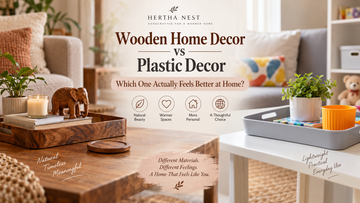
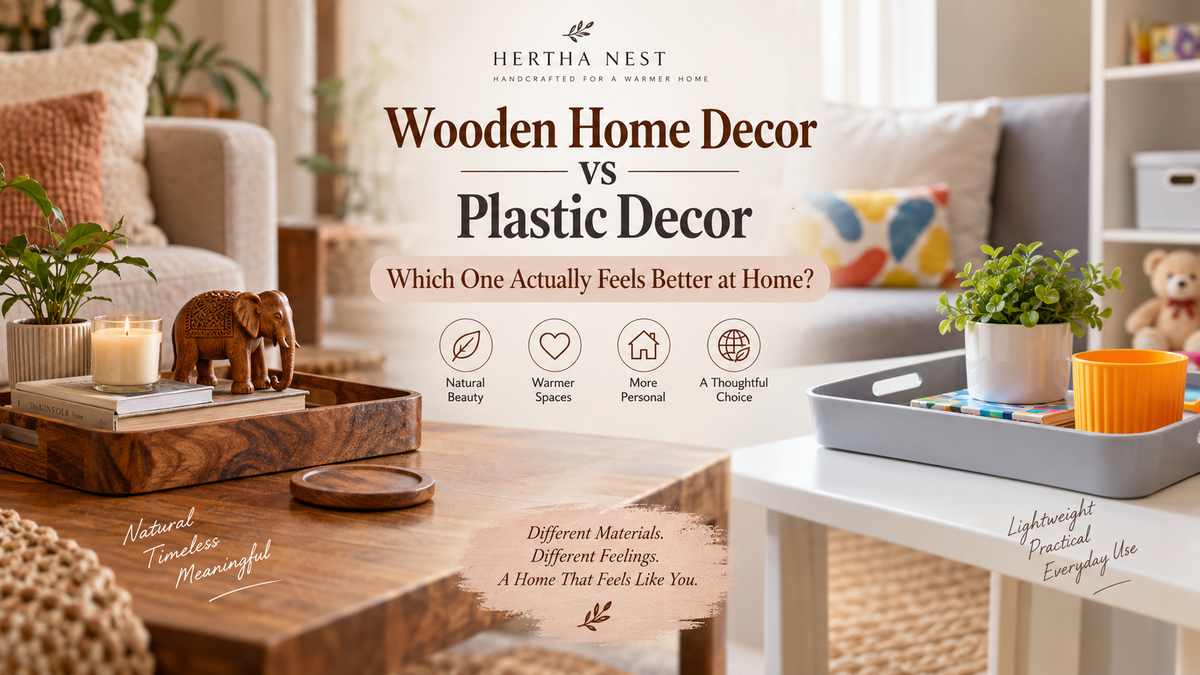
Wooden Home Decor vs Plastic Decor: Which One Actually Feels Better at Home?
When decorating a home, material matters more than we sometimes realise. Two pieces can have a similar shape and purpose, yet feel completely different in a room simply because one is made from wood and the other from plastic.
Plastic décor is popular for a reason. It is usually lightweight, easy to clean and available in countless colours and designs. Wooden décor, on the other hand, brings visible grain, natural texture and a warmer visual character.
So, when it comes to wooden home decor versus plastic décor, which actually feels better at home?
There is no single answer for every room. The better choice depends on how you use the item, the look you want and how much you value natural texture and craftsmanship.
The First Difference You Notice: Texture
Pick up a wooden tray and plastic tray and the difference is easy to notice.
Wood has a natural surface with variations in grain, tone and texture. Even two wooden pieces made in a similar style may not look exactly alike. That variation gives the material a more individual character.
Plastic tends to have a more uniform appearance. That can be useful when you want a clean, consistent look, but it may not create the same sense of warmth.
For living rooms, dining areas and display spaces, texture can make a surprisingly big difference.
Wooden Décor Often Makes a Room Feel Warmer
The visual warmth of wood comes largely from its natural colours and organic texture.
Think about a neutral living room with white walls, soft furnishings and simple furniture. Adding a wooden tray, stool or decorative object can introduce another layer of texture without making the room look busy.
This does not mean every wooden piece will automatically make a room look better. Design, finish, size and placement still matter.
A useful styling principle: A carefully selected wooden accent can complement an interior, while too many unrelated wooden pieces can make the space feel visually crowded.
Plastic Décor Has Its Own Advantages
It would be unfair to treat plastic as the “bad” option.
Plastic décor can be practical in situations where moisture, frequent cleaning or lightweight materials are important. It is also available in a wide range of shapes and colours.
For temporary décor, children's spaces, outdoor areas or situations where an item may need frequent washing, plastic can sometimes be the more convenient choice.
The question is therefore not simply whether wood is better than plastic. It is about choosing the material that makes sense for the particular item.
Which Material Looks More Personal?
This is where wooden décor often has an advantage.
A handcrafted wooden object can have small differences in grain, shape and finish. Those details can make it feel less like a generic decorative object and more like something chosen specifically for your home.
A wooden piece can also connect different design styles. A traditional handcrafted object can sit comfortably in a contemporary room when the colours and proportions are right.
For people who enjoy décor with a sense of story or craftsmanship, this quality can matter more than having a perfectly uniform finish.
Wood and Plastic in Everyday Home Styling
The best way to compare the two is to look at common home décor situations.
Coffee Table
A wooden tray can create a warm base for books, candles, flowers or other small objects. It can make several separate items look like one organised arrangement.
A plastic tray can perform the same basic function and may be easier to wipe clean. The difference is mainly in the visual character it brings to the room.
Dining Table
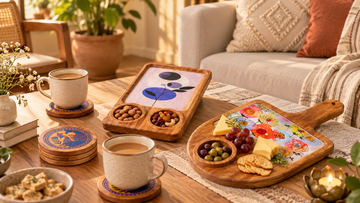
Wooden platters and serving pieces can work as both functional objects and part of the table setting.
Natural textures can pair particularly well with ceramic, cotton, linen and neutral tableware.
Plastic pieces may be more practical for casual or high-frequency use, especially when easy washing is the priority.
Entryway
A small wooden stool, tray or decorative object can make an entryway feel more welcoming without requiring a major change.
Plastic can work here too, but choosing pieces with a natural-looking finish and appropriate proportions becomes more important if you want a refined appearance.
Shelves and Display Corners
For shelves, the texture of wood can help break up rows of books, ceramics or other smooth surfaces.
A small wooden decorative piece can become a visual focal point without needing bright colours or complicated patterns.
What About Durability?
Durability depends on much more than the word “wood” or “plastic.”
The type and quality of wood, construction, finish and intended use all matter. The same applies to plastic products, where quality can vary considerably.
Wood also needs appropriate care. Moisture, prolonged exposure to direct sunlight, heat and unsuitable cleaning methods can affect its appearance.
Hertha Nest's care guidance recommends keeping wooden products dry, avoiding prolonged moisture and cleaning them gently.
This means wooden décor can be a good long-term choice, but it should not be treated as completely maintenance-free.
Is Wooden Décor More Sustainable?
This question needs a little care.
Wood is a natural material, but that alone does not automatically make every wooden product environmentally better. The source of the wood, manufacturing process, product lifespan and disposal all matter.
Similarly, plastic products can have different environmental impacts depending on the type of plastic, how long they are used and whether they can be reused or recycled.
If sustainability is important to you, look beyond the material name. Consider how long the product is likely to remain useful, whether it can be maintained, and whether it is designed for repeated use rather than quick replacement.
Where Handcrafted Wood Makes a Difference
For homeowners who prefer décor with more individual character, handcrafted pieces can be an interesting alternative to mass-produced accessories.
Hertha Nest, for example, offers handcrafted wooden products ranging from trays and platters to coasters, stools, toys and culturally inspired decorative pieces.
The appeal is not simply that the products are made from wood. It is the combination of material, design and craftsmanship that can make a piece feel more personal.
You can explore its handcrafted wooden home décor to see how natural materials can be incorporated into everyday spaces without completely changing the existing interior.
When Should You Choose Wood Over Plastic?
Both materials can have a place in a home. The right choice depends on what you expect from the particular product.
Choose Wooden Décor When You Want
- Natural texture and visual warmth
- A more handcrafted appearance
- Décor that complements earthy or neutral interiors
- Pieces that can become part of your long-term styling
- A stronger sense of character in a room
Plastic May Make More Sense When You Need
- Very lightweight décor
- Easy cleaning
- Greater resistance to everyday moisture
- Bright or highly uniform colours
- A practical solution for temporary or frequently changed décor
There is also nothing wrong with combining both.
A home does not need to follow one material throughout. A wooden centrepiece can sit alongside practical plastic storage, while ceramic, glass, fabric and metal can provide additional contrast.
How to Make Wooden Décor Look Modern
If you worry that wooden décor might make your home look old-fashioned, styling makes a big difference.
Try pairing wood with:
- White or beige walls
- Simple furniture
- Neutral fabrics
- Indoor plants
- Ceramic accessories
- Soft lighting
- Black or metallic accents
The result can feel modern while still retaining the warmth of natural material.
You also do not need a large wooden furniture collection. A few smaller details, such as a tray, coaster set, platter or decorative object, can be enough to introduce the material into a room.
Frequently Asked Questions
Is wooden home decor better than plastic décor?
Not in every situation. Wood often offers more natural texture and warmth, while plastic can provide practical benefits such as lightweight construction and easy cleaning.
Does wooden décor suit modern homes?
Yes. Simple wooden pieces can work particularly well with minimalist, contemporary, neutral and modern interiors.
Is wooden décor difficult to maintain?
It generally needs more care than some plastic products. Keeping wooden pieces dry, cleaning them gently and protecting them from excessive heat and moisture can help maintain their appearance.
Can I use wood and plastic décor together?
Absolutely. Combining materials can make a room more interesting. The key is to keep the colours, shapes and proportions visually balanced.
What makes wooden décor feel more personal?
Natural grain, handcrafted details and designs connected to traditional or artistic influences can give wooden pieces a distinctive character.
So, Which One Actually Feels Better?
If the question is purely about convenience, plastic can often be the easier option.
But if the goal is to make a home feel warmer, more textured and more personal, wooden décor has a distinct appeal. Its natural variations can bring depth to simple spaces, while handcrafted designs can add a sense of character that does not depend on bright colours or elaborate styling.
The best approach is not to replace every plastic item in your home. Instead, choose materials based on how you want each space to look and function.
Sometimes, one well-chosen wooden piece can do more for a room than several decorative objects competing for attention.